
You scrub the bathroom, the tiles gleam, and yet the grout between them stays stubbornly grey or brown. The usual response, scrubbing harder, barely makes a dent, because dark grout is rarely just dirty. Here is what is really happening in those lines, why scrubbing falls short, and what genuinely restores them.
Dark Grout Isn’t Just “Dirty”: Here’s What’s Really Happening
Grout is porous by design
Grout is a cement-based material, and that makes it naturally porous. Rather than sitting on the surface like a sealed tile, it is riddled with tiny holes that absorb moisture, dirt, grease and anything else that lands on it. Think of it less like a solid barrier and more like a sponge set between your tiles.
That porosity is the root of the whole problem. When you mop or wipe the area, you are only cleaning the very top layer, while the grime that has soaked down into the pores stays exactly where it is. The surface looks treated, but the discolouration sitting below it does not budge.
Structural darkening, not just surface grime
Because the staining lives inside the grout rather than on it, the darkening is structural, not superficial. The colour you are looking at has been absorbed deep into the material over months or years, which is why a surface clean never quite works. You are treating the outside of a problem that lives on the inside.
This is the key shift in thinking. Once you accept that dark grout is a material that has absorbed staining rather than a dirty surface waiting to be wiped, the right solution starts to make sense, and so does the reason scrubbing keeps letting you down.
The Real Reasons Your Grout Keeps Going Dark
Mould and mildew below the surface
In wet areas like showers and splashbacks, mould and mildew are the most common culprits. They thrive in damp, warm, poorly ventilated spaces and feed on soap residue and organic matter, producing the dark grey and black patches you see creeping along the lines. Crucially, they can grow below the surface, sending roots into the porous grout where a surface wipe cannot reach them.
That is why mould often returns within days of cleaning. You have removed what is visible on top, but the growth embedded in the pores survives and simply spreads back out.
Hard-water minerals and efflorescence
Australian tap water often carries dissolved minerals, and over time these leave deposits on and within the grout. In some cases, water moving through the material draws minerals to the surface as it evaporates, leaving a white, powdery residue known as efflorescence. These mineral build-ups discolour the grout and can also weaken it.
Soap scum and worn-out sealant
Soap scum is another quiet offender, building up in a sticky film that traps dirt and feeds mould. Underpinning all of it is the sealant. Grout is meant to be sealed so the pores are protected, but that sealant wears away over time, and in plenty of homes it was never properly applied to begin with. Once the seal is gone, the grout absorbs everything it meets, and the darkening accelerates fast.
Why Scrubbing Alone Won’t Bring It Back
Scrubbing only reaches the surface, not the pores
By now the core issue is clear. Scrubbing, however vigorous, works on the surface, but the staining lives down in the pores. You can spend an hour on your knees with a brush and lift the top film, yet the absorbed discolouration underneath remains untouched. It is the cleaning equivalent of mowing weeds without pulling the roots.
Harsh scrubbing can damage grout and sealant
Worse, going at grout too aggressively can backfire. Stiff wire brushes and heavy pressure erode the grout itself, opening up the surface so it absorbs even more in future. Harsh scrubbing also strips away any sealant still clinging on, and acidic supermarket cleaners can eat into both the grout and certain natural stone tiles. You can end up with grout that stains faster than before you started.
How far home cleaning can realistically get you
None of this means home cleaning is pointless. For light, recent buildup, a paste of bicarb soda and water left to sit, then gently worked with a soft brush, lifts a fair amount, and a follow-up with a little white vinegar or oxygen-based cleaner helps on surface mould. The honest limit is that DIY handles maintenance and mild cases. Once staining is set deep, mould has taken hold below the surface, or the sealant is gone, home methods can only take you so far. This matters most at the end of a tenancy, where discoloured grout is one of the spots agents check closely during a bond back clean.
What It Takes to Restore Dark Grout
Steam and hot-water extraction that reach the pores
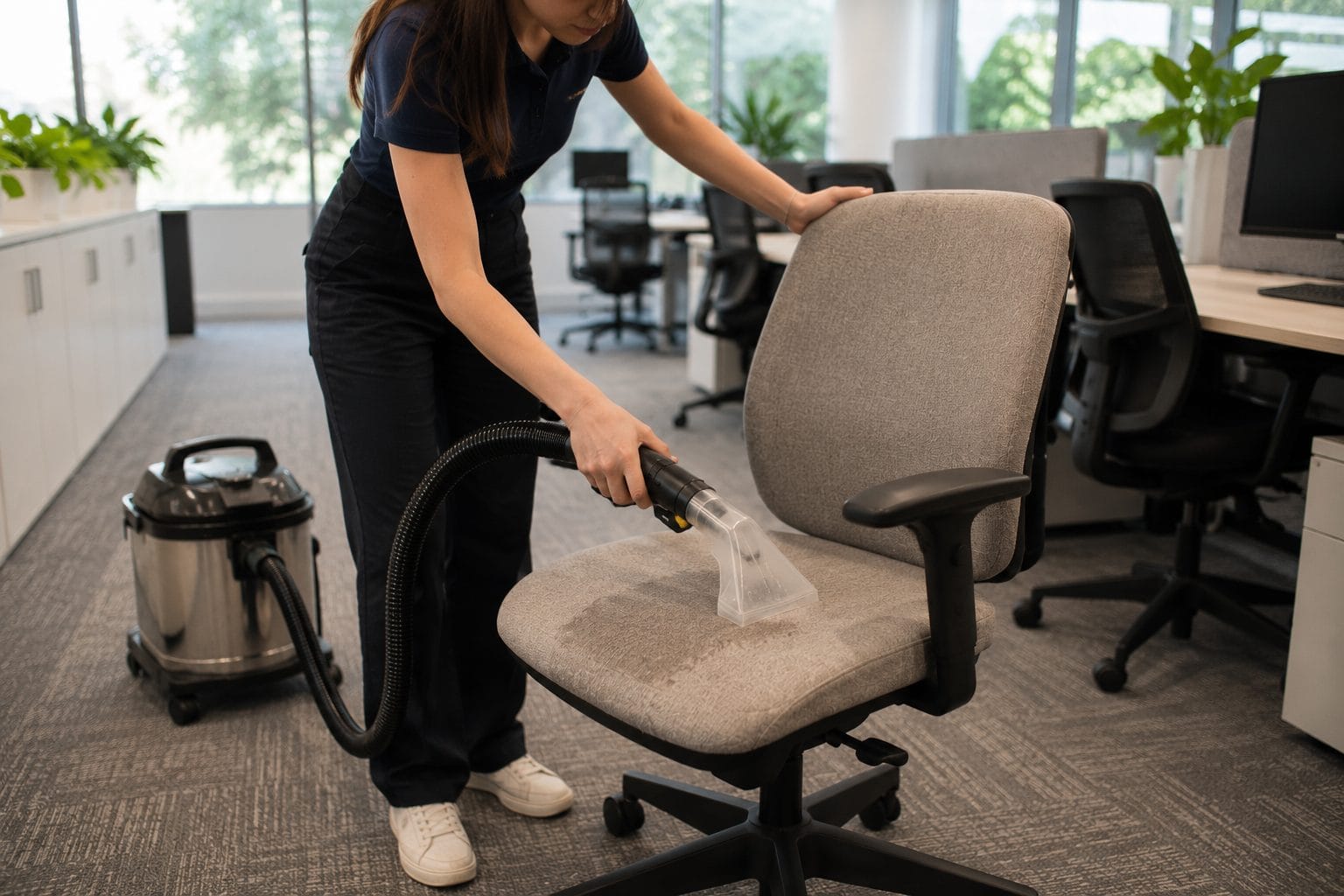
This is where professional equipment changes the game. High-pressure steam and hot-water extraction push heat and moisture deep into the grout, lifting the embedded dirt and killing mould at the root rather than skimming the top. The loosened grime is then drawn back out, flushing the pores in a way no handheld brush can match. It is the difference between cleaning around the problem and cleaning it out. Our tile and grout cleaning service uses exactly this kind of deep extraction.
When dark grout signals a leak or hidden damage
Occasionally, persistently dark or damp grout is a warning sign rather than a cleaning issue. If a patch stays wet, keeps darkening despite treatment, or is paired with loose tiles or a musty smell, it can point to a hidden leak or water getting behind the tiles. In that situation, cleaning is only part of the fix, and it is worth having the waterproofing or plumbing checked before the problem spreads.
Keeping Your Grout Lighter for Longer
Once your grout is restored, a few simple habits keep it that way. Ventilate wet areas well by running the exhaust fan and opening a window, and squeegee or wipe down shower walls after use to cut the moisture mould relies on. Clean regularly with a gentle, pH-neutral cleaner rather than harsh acids, wipe up spills promptly, and have the grout resealed periodically so the pores stay protected.
Done consistently, this maintenance dramatically slows how quickly grout darkens again. Still, even well-kept grout eventually needs a deep professional clean to reset it, especially in older homes or high-use bathrooms. If your grout has gone dark and scrubbing is not bringing it back, get in touch with Cheap and Best Cleaning and we will restore your tiles to a clean, even finish that actually lasts.