
Most of us treat dirty windows as a purely cosmetic issue, something to sort out when we get around to it. The grime looks a little unsightly and the view isn’t quite as clear, but the glass underneath seems fine. Over time, though, the deposits that build up on glass can move from a surface nuisance to lasting damage that a regular clean won’t fix. Understanding how that happens is the first step to keeping your windows clear and protecting the glass for the long run.
Why Dirty Windows Are More Than a Cosmetic Problem
Glass looks perfectly smooth, but under a microscope the surface is full of tiny pits and pores. Water, dust, minerals and airborne pollutants settle into those pores, and the longer they sit, the harder they are to remove. Sunlight bakes them in and moisture helps them bond, so what starts as a light film gradually sets into the surface.
This is why fresh marks and old marks behave so differently. A spot of grime wiped away within a week lifts off with ease, but the same deposit left for months clings on and takes far more effort to shift. Given enough time, that build-up does more than dull the view, and it becomes a great deal harder to undo.
For homeowners, property managers and commercial clients alike, regular cleaning is what keeps a minor upkeep task from turning into a costly repair.
How Grime Turns Into Lasting Glass Damage
The move from everyday dirt to permanent damage tends to follow the same few stages. Recognising them makes it easier to step in while the problem is still simple to reverse.
Hard water stains and mineral deposits
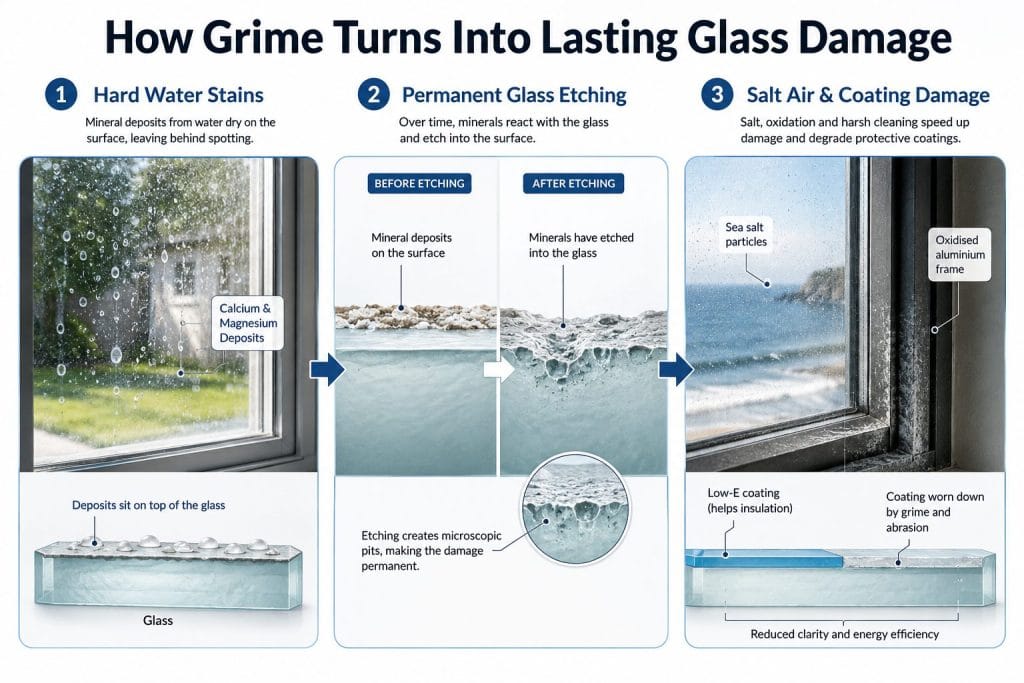
Hard water is one of the most common culprits. When rain, sprinkler overspray or hose water dries on the glass, it leaves behind dissolved minerals such as calcium and magnesium. Each droplet dries into a faint ring, and those rings layer up over time into the cloudy white spotting you’ll often see on windows near garden irrigation or in exposed positions.
At this early stage the deposits are still sitting on top of the glass, so they can be cleaned away with the right approach. The catch is that they draw in more moisture and grime, and left alone they keep building until they’re much harder to shift.
When surface deposits become permanent etching
This is the stage where a cosmetic issue turns into a structural one. Mineral deposits are slightly alkaline, and when they sit on glass for long periods they start to react with the silica in the glass itself. That reaction eats microscopically into the surface and leaves behind etching – a form of corrosion that has changed the glass rather than simply marked it.
Once glass is etched, cleaning alone won’t bring it back, because the deposit is no longer resting on the surface but has become part of it. This is why timing counts for so much. A window that looks a little spotty today is far simpler and cheaper to sort out than the etched pane it can become after a couple of neglected years.
Salt air, oxidisation and coating damage
Homes near the bay have an extra factor to contend with. Salt carried in on the sea breeze is corrosive, and it settles into a fine film that speeds up the same deposit-and-etch process. In coastal suburbs, both the glass and the metal window fittings tend to show signs of oxidisation sooner than they would further inland.
Heavy build-up can also affect modern window features. Many newer windows carry low-emissivity (low-E) coatings that help with insulation, and abrasive grime or harsh scrubbing can wear these down, reducing both clarity and energy efficiency. It’s one more reason that gentle, regular cleaning works better than leaving marks to accumulate.
What Professional Cleaning Can and Can’t Restore
Caught early, almost all of this build-up is completely reversible. The options only start to narrow at the far end of the scale, so it helps to know which stage your windows are at before deciding how to treat them.
Deposits that clean away completely
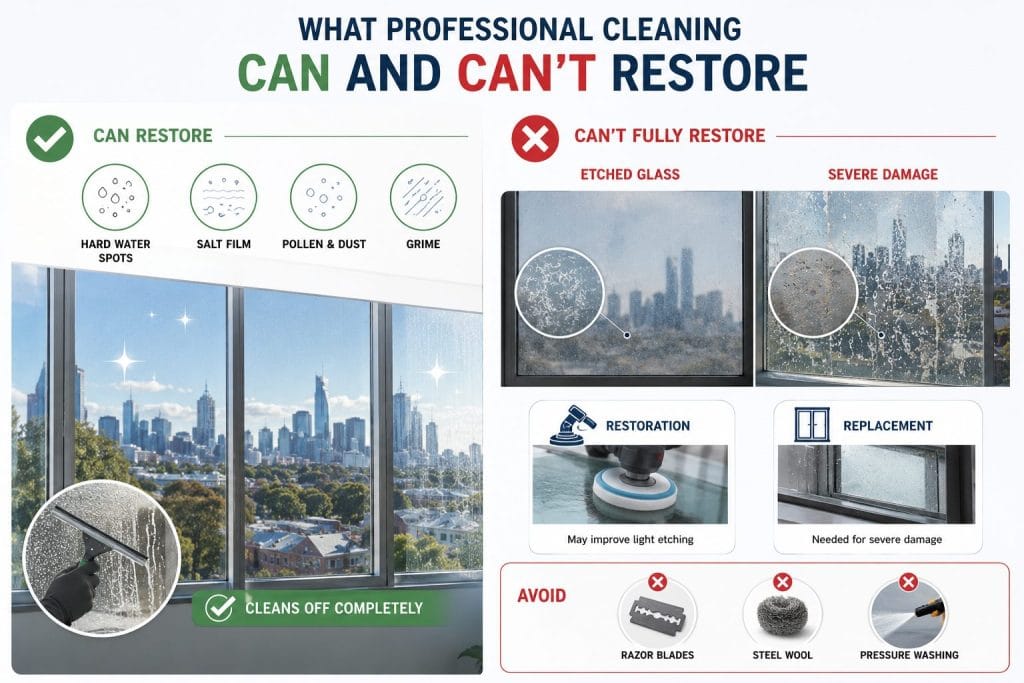
The vast majority of dirty windows fall into this category. Surface-level hard water spotting, salt film, pollen, dust and general grime all respond well to professional methods, even after building up over a season or two. A proper clean with the right solutions lifts these deposits off the glass and restores full clarity, clearing the reactive minerals well before they have a chance to etch.
For most homes, this is the whole story. Regular cleaning keeps the glass at this easily cleaned stage year after year.
Etched glass and when restoration or replacement is needed
Once etching has set in, the approach changes. Light etching can sometimes be improved with specialist glass polishing or restoration compounds, though the results depend on how deep the corrosion runs. Where the damage is more severe, replacing the affected pane is often the only way to fully restore clarity.
Neither of these is a routine cleaning job, and both cost considerably more than the regular maintenance that would have prevented the issue in the first place. It’s a strong case for staying ahead of build-up rather than waiting for the damage to show.
A few habits make matters worse and are worth avoiding. Scraping at deposits with razor blades or steel wool scratches the glass, and pressure washing can force water past the seals and damage coatings. Gentle, consistent care is always the safer path.
Protect Your Windows with Professional Care
Keeping your windows clean is one of the most straightforward ways to protect them. Windows are a significant part of any property, and regular cleaning keeps mineral deposits at the removable stage, stops etching before it starts, and keeps your glass clear and your view sharp throughout the year.
For most Melbourne homes, a seasonal clean is enough to stay well ahead of any damage, and it helps to understand how the local weather affects your windows (link toi bai When to Clean Windows in Melbourne: How the Seasons Affect Your Glass) through the year so you can time it well. Our team looks after the glass, frames, sills and tracks as part of our professional window cleaning service, covering homes and commercial properties right across the suburbs we serve.
If your windows are looking spotty or you’d like to keep them in good condition, contact our team for a quote and we’ll help you protect the glass before any marks set in.