
Steam cleaning is one of the most effective ways to lift built-up grime, dust mites and everyday stains from a sofa. The catch is that it doesn’t suit every fabric. Some materials handle heat and moisture beautifully, while others shrink, watermark or bleed the moment they get wet. Knowing which group your couch falls into is the difference between a fresh, revived lounge and an expensive mistake.
This guide walks you through the fabrics that respond well to steam or wet cleaning, the ones that call for a gentler approach, and why a professional assessment is worth having before anyone touches your upholstery.
Why Fabric Type Decides How Your Couch Should Be Cleaned
Every upholstery fabric reacts differently to moisture, temperature and cleaning solutions. A material that shrugs off hot water extraction on one lounge might warp or discolour on the next, which is why there’s no single method that works across the board. A universal cleaner that works on one sofa may permanently stain another.
Synthetic fibres tend to be far more forgiving, since they resist water absorption and hold their shape under heat. Natural fibres such as silk, wool and some linens are the opposite. They soak up moisture, and that’s where problems like shrinkage and colour bleed begin. Getting the fibre content right from the start sets the direction for everything that follows, so it’s always the first thing a good cleaner checks.
Understanding Upholstery Cleaning Codes
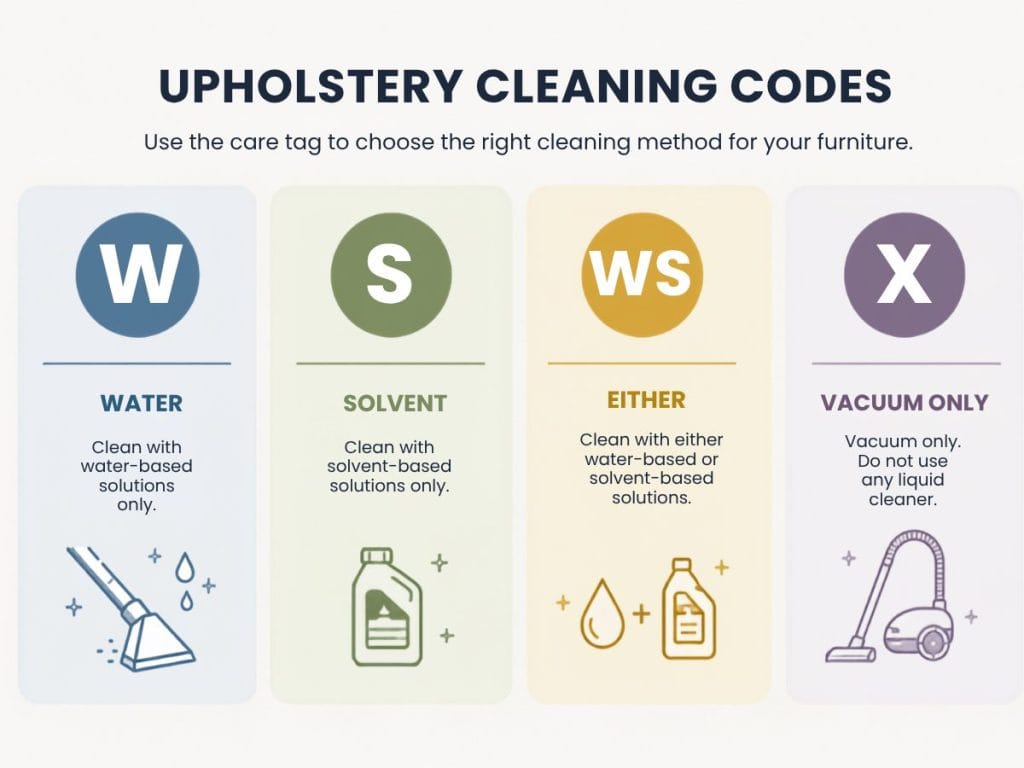
Most furniture carries a care tag with a cleaning code, and it’s the quickest way to learn how a piece should be treated. The W, S, WS and X system comes from the Joint Industry Committee for upholstery fabric standards and is set by the mill after testing the fibre, the construction and any applied finish. Once you know what each letter means, a lot of the guesswork disappears.
Each code points to a different cleaning method:
- W means water-based cleaning is suitable, which covers hot water extraction and steam
- S means solvent or dry cleaning only, since water can affect the fabric
- WS (sometimes shown as SW) means either water-based or solvent methods can be used
- X means vacuum only, with no liquid cleaner of any kind
The tag is usually found beneath a seat cushion or along the base of the frame. When a piece has been reupholstered or the label has worn away, a professional can assess the fibre by hand and choose the safest route, which is exactly the kind of judgement that protects a favourite couch.
Fabrics That Are Safe to Steam Clean
A good range of everyday upholstery takes well to steam and hot water extraction, which is part of why the method is so widely used. These fabrics are durable, colour-stable and comfortable with moisture, so they respond beautifully to a deep clean.
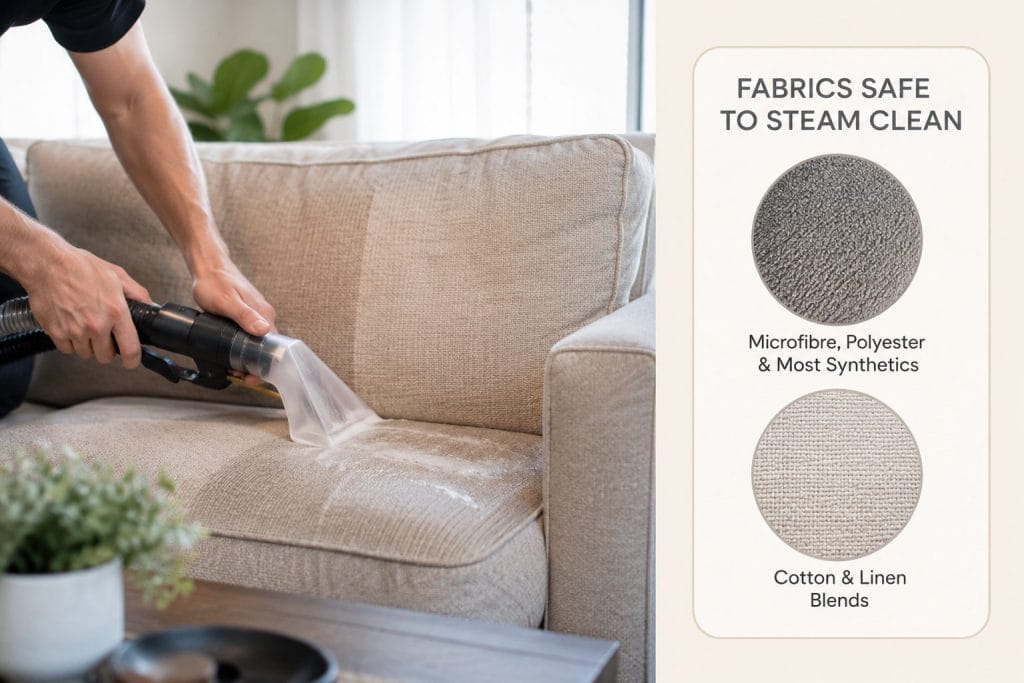
Microfibre, polyester and most synthetics
Synthetic fabrics are among the easiest to clean and the most forgiving. Microfibre, polyester, nylon and acrylic are built to handle regular use, and they hold their colour and shape well when treated with a water-based method.
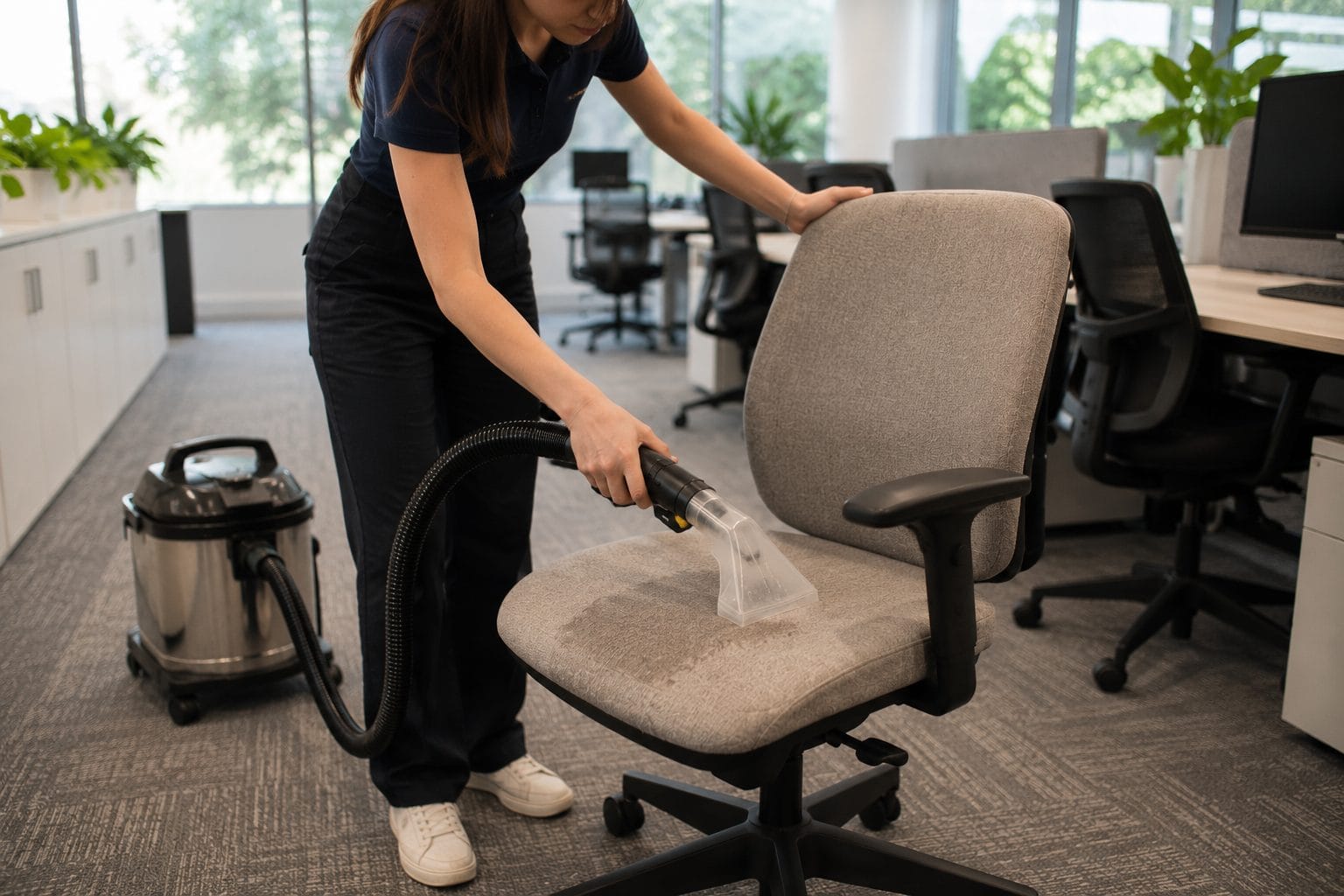
Hot water extraction lifts embedded soil, oils and allergens from these fibres and dries within a comfortable window, which makes them a natural fit for busy households and commercial settings alike. The same deep-cleaning approach carries across to carpet cleaning on the same floor, where synthetic fibres respond in much the same way.
Cotton and linen blends coded for water
Many cotton and linen blends carry a W or WS code, which means they’re suitable for water-based cleaning. Blends tend to hold up better than pure natural fibres because the synthetic content adds stability and helps the fabric keep its shape through the process.
A gentle pre-test on a hidden area confirms the fabric is colour-fast, and from there a controlled hot water clean brings the upholstery up beautifully. The key is keeping moisture measured and extraction thorough, which is where professional equipment earns its place.
Fabrics That Need Dry or Specialist Treatment
Some fabrics are at their best with a dry or low-moisture approach, and choosing that route is simply a matter of caring for the material properly. These pieces are often the most beautiful in a room, so treating them the right way keeps them looking their finest for years.
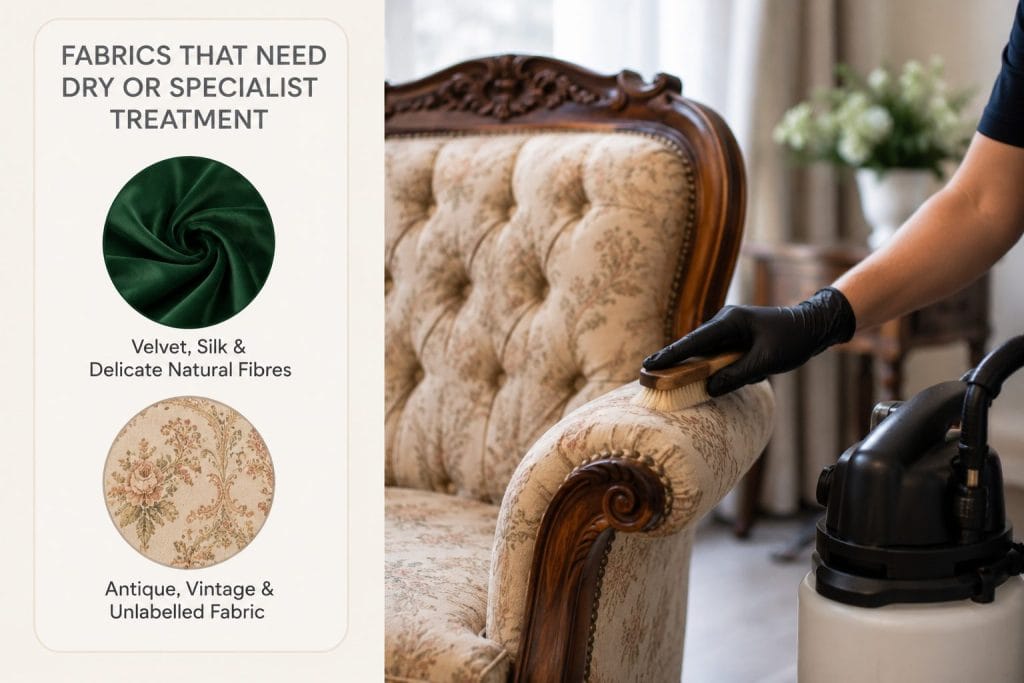
Velvet, silk and delicate natural fibres
Silk, velvet and fine natural fibres such as certain wools and rayons usually carry an S code, which points to solvent cleaning. Water can affect the pile on velvet or leave marks on silk, so a specialist dry method is the considered choice.
A professional uses a controlled solvent process designed for these fabrics, drawing out soil while preserving the texture and sheen that make them special. Handled this way, delicate upholstery comes up looking rich and even.
Antique, vintage and unlabelled fabric
Older and antique pieces deserve a gentle, considered approach, particularly when the original care label is long gone. Vintage dyes and aged fibres can be more sensitive than modern equivalents, so an unhurried assessment comes first.
A professional identifies the fibre by feel and appearance, then selects a low-moisture or solvent method that suits the age and condition of the piece. This careful start is what allows a treasured heirloom to be freshened safely.
What the Wrong Method Can Do to Your Upholstery
Choosing the right method is worthwhile because fabric and water don’t always agree, and a mismatched approach shows in the finished result. On an S-coded fabric, water can leave rings or a browning effect as moisture moves through the fibres. Natural fibres that aren’t rated for water may shrink or tighten, which changes the fit of a cushion cover.
Rich colours and older dyes can transfer or bleed when too much moisture is introduced, and heavy pile such as velvet can flatten or mark. This is exactly where a professional assessment proves its worth. Before any cleaning begins, a professional reads the code, tests a hidden area and matches the method to the fabric, so the result is a couch that looks its best rather than one that needs putting right.
That expert eye is the real value of a professional service, and it’s why so many Melbourne households and businesses leave delicate pieces in trusted hands. Regular care also keeps fabric furniture in lovely condition between deep cleans, a habit that pays off across any workplace as much as in the home.
Book Professional Upholstery Cleaning in Melbourne
Getting the method right starts with knowing your fabric, and that’s exactly what a professional brings to every job. Whether your upholstery calls for hot water extraction or a specialist dry clean, Cheap and Best Cleaning matches the treatment to the material for a safe, thorough finish. Explore our full range of professional upholstery cleaning services, then get in touch for a free quoteand advice tailored to your furniture.