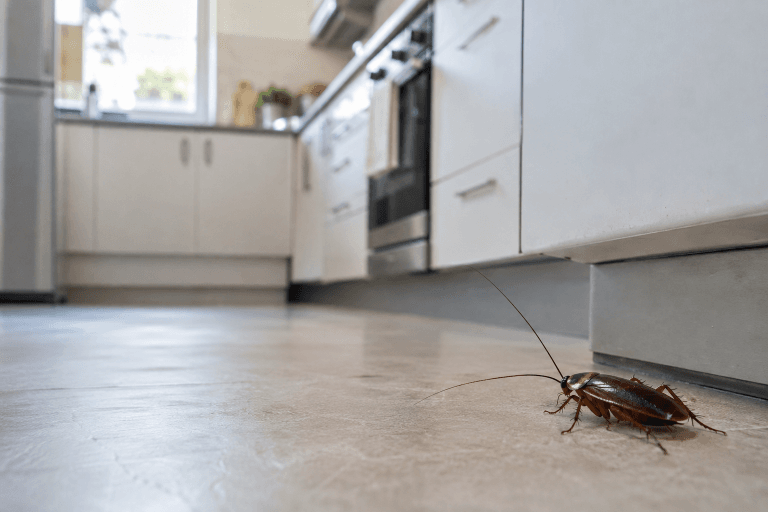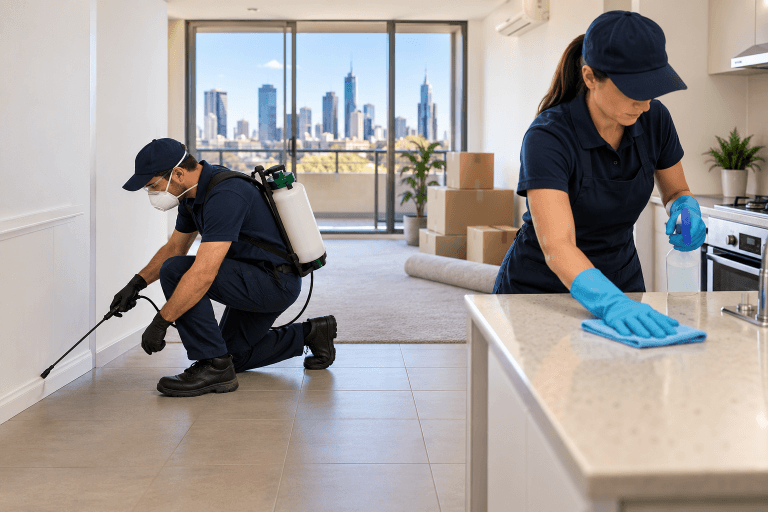

Finding cockroaches in a rental property raises one immediate question: whose responsibility is it to deal with them? In Victoria, the answer depends on cause and timing, not just what’s written in your lease.
If the infestation was already there when you moved in, or it’s linked to a building fault, the landlord is typically responsible. If it’s caused by your own habits, responsibility usually falls on you as the tenant. This guide covers what to document, how to raise it with your property manager, and when to organise treatment yourself to protect your bond.
Landlord or Tenant: Who Handles Cockroach Problems?
Figuring out who is responsible for pest control in a rental property starts with one question: what caused the cockroaches to appear?
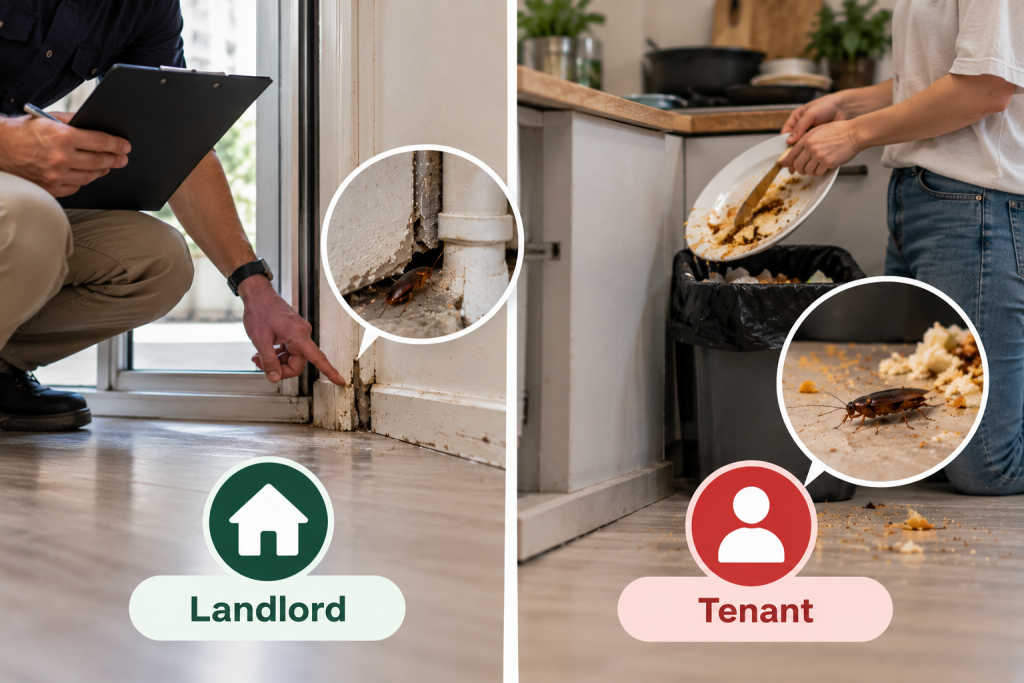
Landlord: Pre-Existing or Structural Issues
Consumer Affairs Victoria notes the law doesn’t always say who is responsible for pests, so cause and timing matter. If cockroaches were already present when you moved in, or if a building fault like poor drainage, gaps in external walls, or broken seals has allowed them in, the landlord is generally responsible for arranging treatment.
According to Consumer Affairs Victoria, if a pest problem is caused by something to do with the building structure, the renter can request an urgent repair under the Residential Tenancies Act 1997. It counts as urgent if the pests make the property unsafe or insecure. Otherwise, it can be requested as a non-urgent repair. Examples include cockroaches entering through shared plumbing, cracks in foundations, or faulty door and window seals.
If you notice cockroach activity within the first few weeks of moving in, that timing alone is a strong indicator the issue existed before your tenancy began.
Tenant: Poor Cleaning or Food Waste
If the cockroach problem started well after you moved in and is linked to how the property has been maintained, you are likely responsible. Common causes that fall on the tenant include leaving food scraps out, not emptying bins regularly, or allowing grease to build up around the kitchen and cooking areas.
Consumer Affairs Victoria notes that a renter may be responsible if their actions or behaviour contributed to the problem. This includes cockroaches attracted to rubbish that was not removed or food that was left accessible.
In practice, who’s responsible for cockroaches in a rental property isn’t always clear-cut. When responsibility is shared, discuss it directly and agree in writing who pays for treatment before booking it. If you can’t agree, the formal options below apply.
What to Do If You Find Cockroaches in a Rental
Whether the landlord or the tenant is responsible for cockroaches in your situation, acting quickly protects your position and helps get the issue resolved without unnecessary delays. Cockroaches are just one of several pests common in Melbourne rentals, so it’s worth knowing what else to watch for if you’re dealing with more than one issue.
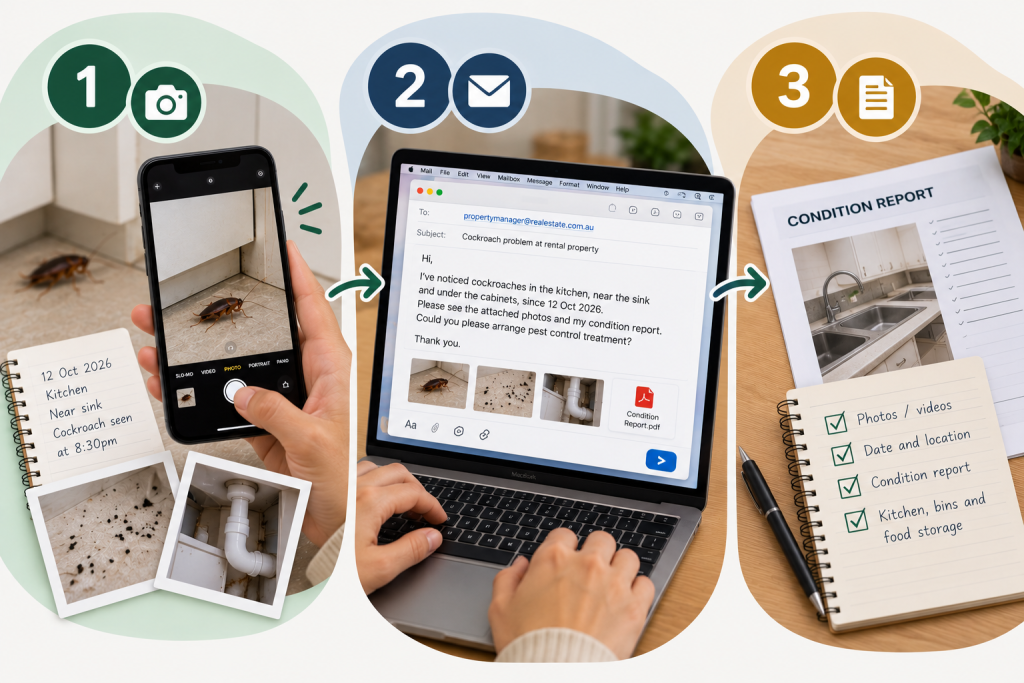
Evidence to Collect Before You Report It
Before contacting your property manager, take time to document the problem properly. Good evidence makes it much harder for anyone to dispute the facts later.
What to gather before reporting:
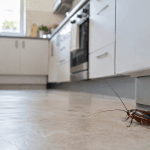
- Dated photos or videos showing cockroach activity, droppings, or egg casings
- Notes on where and when you first noticed the issue
- A copy of your condition report from move-in day
- Photos showing the current state of your kitchen, bins, and food storage
Your condition report matters most if cockroaches appeared soon after you moved in. It can demonstrate that the property was already affected before you had any chance to contribute to the problem.
How to Report a Pest Problem to Your Property Manager
Always report a cockroach problem in writing. An email or a message through your rental portal creates a record that protects you if the matter escalates.
When you write to your property manager, include:
- A clear description of the problem and its location in the property
- The date you first noticed cockroach activity
- The evidence you have gathered (photos, condition report references)
- A direct request for the landlord to arrange treatment, if you believe it falls under their responsibility
If the problem stems from a structural issue, such as gaps or damp letting cockroaches in, it may qualify as an urgent repair under Section 72 of the Residential Tenancies Act 1997, and your landlord is required to respond promptly. This applies across Victoria, not just in Melbourne. Keep copies of all messages and note the dates of any follow-up communication.
When to Organise Cockroach Treatment Yourself
There are situations where waiting for the landlord to act isn’t realistic. If the cockroach problem is clearly linked to your own household habits, arranging treatment yourself is the right step. Even when responsibility is disputed, some renters choose to act early to prevent the issue from spreading and to avoid risking deductions later.
A cockroach infestation that reaches carpets, cupboards, or behind appliances can lead to deductions at your final inspection, particularly if you cannot show that you took reasonable steps to manage the problem during your tenancy. This matters most if you’re nearing the end of your lease, when a vacate clean alongside pest treatment helps protect your bond.
Here’s what to keep in mind if you decide to organise treatment yourself:
| Consideration | Why It Matters |
|---|---|
| Act before it spreads | Cockroaches multiply quickly, and an untreated problem is harder (and more expensive) to clear the longer it's left. |
| Choose a licensed provider | A licensed pest control operator can issue a receipt and treatment certificate, which serve as evidence that you took reasonable action. |
| Keep every record | Save invoices, treatment dates, and before-and-after photos in case the cost is ever disputed with your landlord. |
Resolving a Dispute Over Who Pays for Pest Treatment
If you and your landlord cannot agree on who should cover cockroach treatment, put your position in writing and keep a clear record of every communication. Withholding rent isn’t a safe option, as this can put your own tenancy at risk.
You can contact Consumer Affairs Victoria for guidance, and repair disputes can go to Rental Dispute Resolution Victoria (RDRV), a free VCAT service, before a VCAT hearing. Confirm the current process on the CAV page before publishing.
Knowing your tenant rights early makes this process far less stressful, and thorough documentation from the start gives you the best chance of resolving who’s responsible for cockroaches in a rental property without needing to go to VCAT.
If you’re approaching the end of a lease and still unsure where you stand, get in touch with Cheap and Best Cleaning. Our team can help sort pest treatment and your end-of-lease clean before the final inspection.
This guide is general information, not legal advice. For advice specific to your situation, contact Consumer Affairs Victoria or seek independent legal guidance.
End of lease, carpet, tile, upholstery and window cleaning across Melbourne.