
If you’re renting in Melbourne, pests are one of those problems that can seem to appear out of nowhere. One week the property is fine, and the next you’re spotting cockroaches in the kitchen or finding ant trails along the skirting boards.
Rental properties can present some additional challenges when it comes to dealing with common pests in Melbourne rental properties. New occupants may not know the property’s pest history. In apartments and townhouses, shared walls, plumbing, or other pathways can also let pests move between units undetected.
Cockroaches, fleas, rodents, silverfish, and ants are the ones renters run into most often, and each tends to show up for a different reason.
Why Melbourne Rental Properties Are Prone to Pests
Rental properties face a specific set of conditions that make them more attractive to pests than owner-occupied homes. Frequent tenant turnover means new occupants often don’t know the property’s history, including any pest issues from previous tenancies. Shared walls in units and townhouses also make it easy for pests to move between properties undetected.
Melbourne’s seasonal conditions can influence pest activity too. Warmer months can increase the activity of insects such as ants and cockroaches, while cooler conditions may encourage some pests to seek shelter indoors.
Older properties may also have gaps around doors, windows, pipework or other entry points that make it easier for pests to get inside, particularly where seals or building components have deteriorated over time.
Property maintenance schedules also differ from those in owner-occupied homes. Routine inspections may not always catch early signs of a pest problem, especially if it’s isolated to areas like subfloors, roof cavities, or behind appliances.
The Most Common Pests You’ll Find in a Rental
Some pests appear in Melbourne rentals more often than others. Here’s what tenants are most likely to encounter.
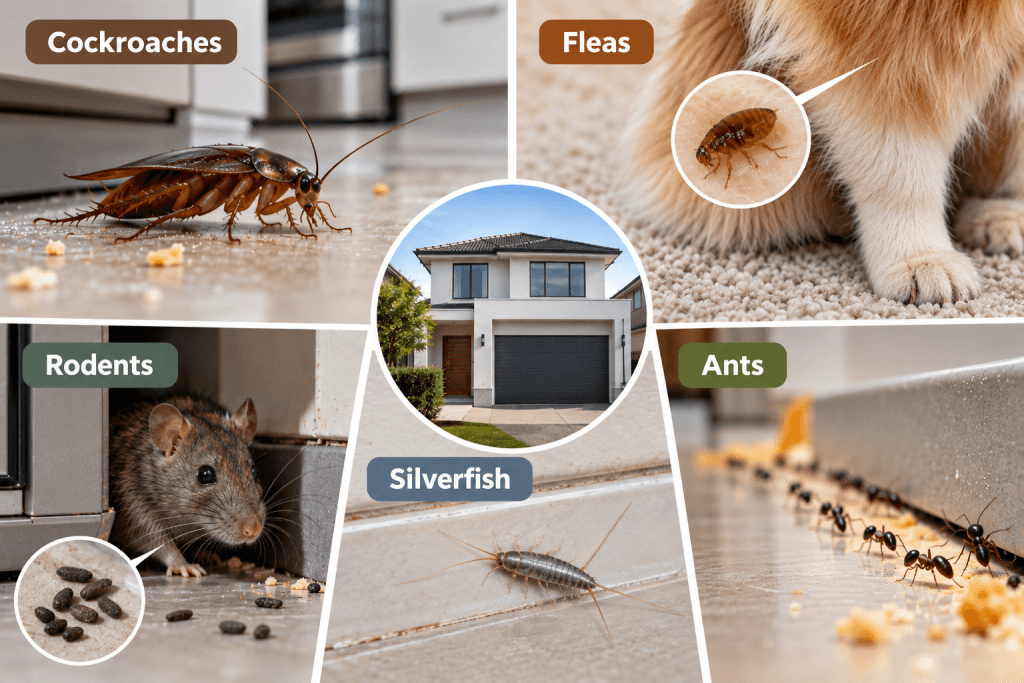
Cockroaches and Why They Thrive Indoors
Cockroaches are among the most common pests reported in Melbourne rental properties, and for good reason. They need very little to survive: a small amount of food, some moisture, and a warm, dark space to hide in. Kitchens and bathrooms are their preferred territory, particularly around drains, behind appliances, and inside wall cavities.
What makes cockroaches especially hard to stay ahead of is how fast they multiply. The German cockroach, the species most commonly found indoors, can produce three to four generations a year and reach adulthood in as little as 40 days, according to the Victorian Department of Health, which is why what starts as an occasional sighting can turn into a larger infestation within weeks if the conditions remain favourable.
They’re also skilled at squeezing through tiny gaps, which means they can move between units in a building via shared plumbing and wall cavities.
Fleas and How They Enter a Rental
If a previous occupant had pets, fleas may have been left behind in carpets or soft furnishings. According to Cornell University’s New York State Integrated Pest Management Program, flea pupae can stay dormant for months, protected from most pesticides, and only emerge when they detect a nearby host’s vibration, heat, or carbon dioxide. This is what makes fleas such a frustrating, often inherited pest for renters.
Fleas can also enter a property through pets brought in by the current tenant, or via wildlife such as possums that access roof spaces or subfloors. Once established, fleas tend to concentrate in carpeted areas, along skirting boards, and anywhere pets spend time resting.
Rodents and the Signs They Leave Behind
Subfloors, roof cavities, and older construction with gaps around pipework and eaves make Melbourne rentals an easy target for mice and rats. Rodents are most active at night, so many tenants don’t see the pest itself but notice the signs instead: droppings in cupboards or along skirting boards, gnaw marks on food packaging or wiring, and scratching sounds within walls or ceilings after dark.
Rodents are drawn to properties that offer easy access points and a reliable food source, which is why kitchens, pantries, and garages are the areas most affected.
Silverfish and the Damp Areas They Prefer
Bathrooms, laundries, and any area with persistent moisture tend to attract silverfish, a pest that’s less destructive than cockroaches or rodents but still a common nuisance in Melbourne rentals. They’re drawn to humidity and often appear in properties with poor ventilation, minor leaks, or condensation issues.
You’ll usually spot silverfish around damp skirting boards, inside cupboards near plumbing, or on bathroom tiles. While they don’t pose a direct health risk, a growing silverfish population is often a sign that moisture levels in the property need attention.
Ants and Why They Return Season After Season
Spring and summer bring a noticeable rise in ant activity across Melbourne rentals, making them one of the more seasonal pests tenants deal with. They enter through the smallest of gaps in search of food and water, and once a colony identifies a reliable source, it will keep sending workers back until that access point is addressed.
Kitchens are the most common target, particularly around bins, food storage areas, and any surface with crumbs or spills. Because the visible trail is only one part of an ant colony, treating the ants you can see may not address the nest or the conditions attracting them.
If the colony is difficult to locate or the problem keeps returning despite basic control measures, a licensed pest control operator can identify the source and recommend a more targeted treatment.
Conditions That Attract Pests to Rental Properties
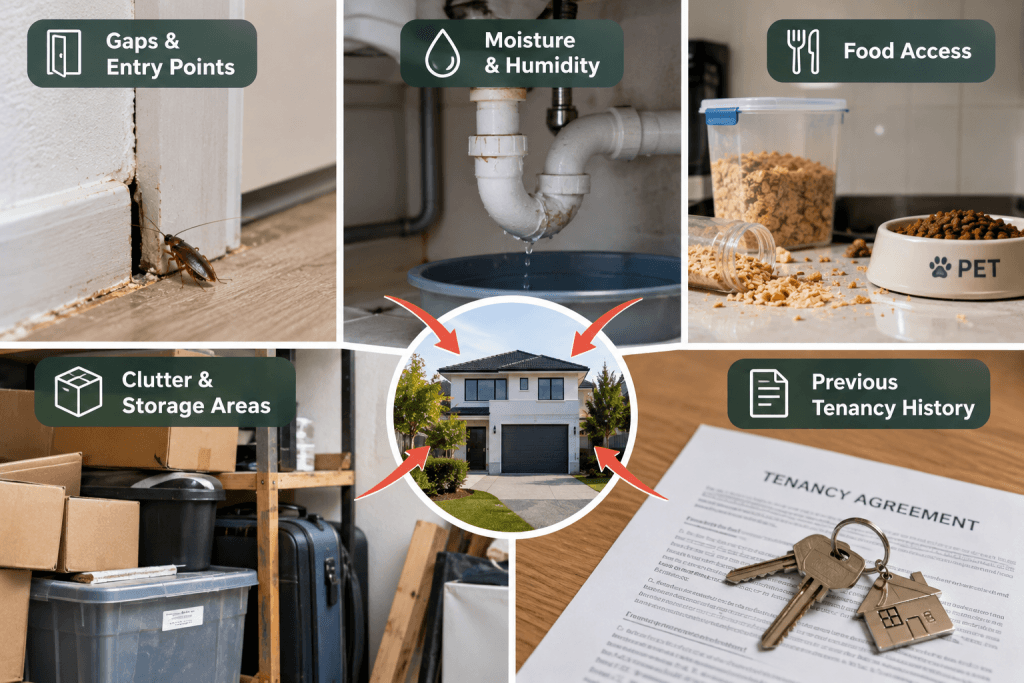
While each pest has its own habits, most infestations in Melbourne rentals can be traced back to a handful of shared conditions:
- Gaps and entry points around doors, windows, pipework, and eaves that go unnoticed until a pest problem develops
- Moisture and humidity, whether from leaks, poor ventilation, or condensation, which attracts silverfish, cockroaches, and other moisture-loving pests
- Food access, including unsealed pantry items, pet food left out, or bins that aren’t regularly emptied
- Clutter and storage areas, particularly garages, subfloors, and roof cavities, which give pests undisturbed places to nest
- Previous tenancy history, since pests like fleas and cockroaches can be inherited from earlier occupants if the property wasn’t treated between leases
None of these conditions are usually the fault of a single tenant, which is why a property can develop a pest issue even when the current occupant is doing everything right.
Consumer Affairs Victoria notes that pest and infestation problems can affect health and cause property damage if left unaddressed, and that responsibility often depends on whether the renter’s actions contributed to the issue or it stems from the property itself, such as a pre-existing infestation or structural gap. See Consumer Affairs Victoria’s guidance on pests, infestations and mould for the full breakdown of responsibilities.
Professional Pest Treatment: The Reliable Solution
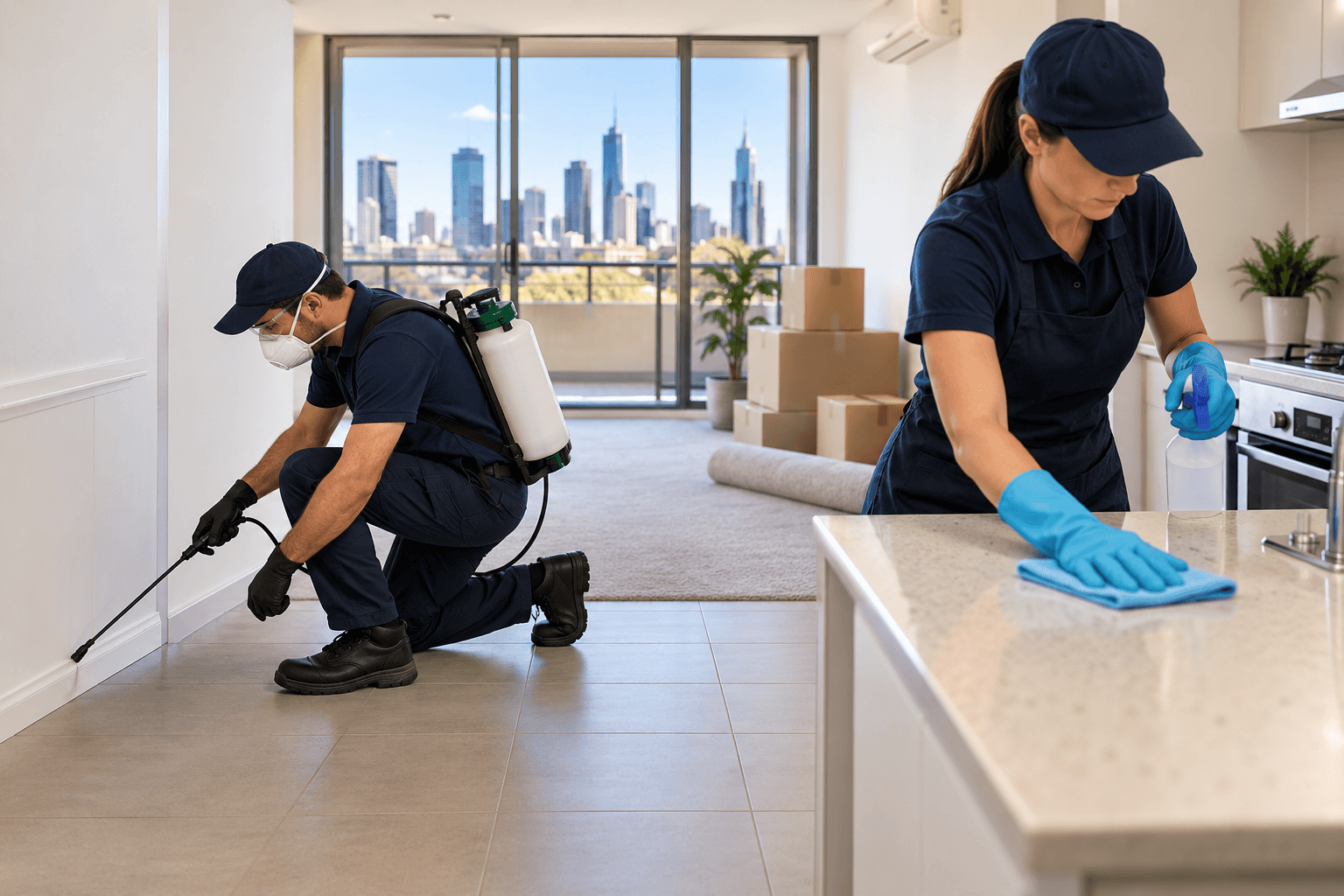
Some minor pest problems can be managed with improved hygiene, removing food and water sources, sealing entry points or using appropriate household pest-control products. However, if pests keep returning, the infestation is widespread, or the source is difficult to identify, a licensed pest control operator can assess the type, source, and extent of the problem and recommend an appropriate treatment.
This matters even more at the end of a tenancy. A property with an active or recent pest issue can affect whether a rental passes its final inspection, which is why it’s worth booking professional pest control alongside your vacate cleaning if you’ve noticed any signs of pests during your tenancy. Addressing both at once helps ensure the property is left in the condition expected by the agent, without added stress in the lead-up to moving out.
Whether it’s one sighting or an ongoing problem, getting a professional assessment early is the simplest way to keep it from affecting your bond.