
A spill on the couch is one of those small household moments that puts everyone on edge. Whether it’s a glass of red at dinner or a child’s juice cup tipping over, the first question is always the same: will that come out?
Some stains lift away completely while others can settle in for good, and the difference usually comes down to a few key factors. Knowing what professional cleaning can realistically remove helps you act quickly and judge when it’s worth calling in a specialist.
What Decides Whether a Couch Stain Comes Out
Two things influence the outcome more than anything else: how quickly the stain is treated, and the type of fabric involved. A fresh spill dealt with promptly stands a far better chance of lifting cleanly, because the liquid is still sitting in the fibres rather than bonding to them. Left for days or weeks, it starts to set, and that’s when a simple mark turns into a lasting one.
Heat works against you as well. Warm water, sunlight and even a hot day can cook certain stains into the fabric and make them much harder to shift. Fabric type is the other deciding factor, since delicate or absorbent materials hold onto spills quite differently to hard-wearing synthetics.
A quick response on a durable fabric is a straightforward job, while a set-in mark on something delicate is a genuine challenge.
Common Couch Stains and What Cleaning Can Achieve
Different stains behave in different ways, and each responds to its own type of treatment. Here’s what to expect from the spills that turn up most often.
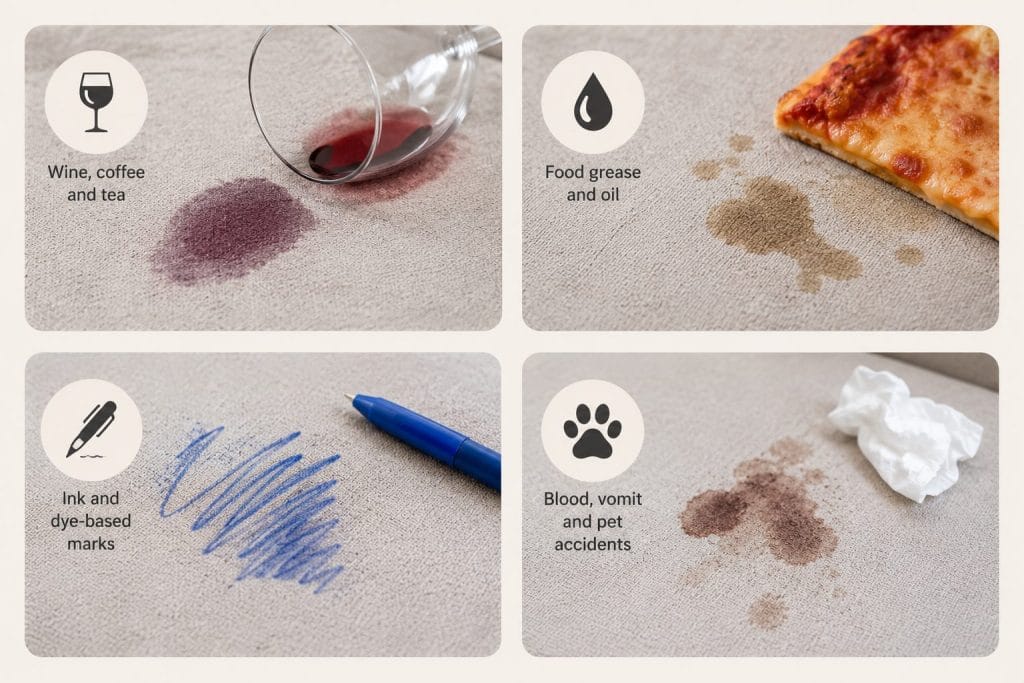
Wine, coffee and tea
These are tannin-based stains, the kind that leave a deep colour behind. Treated quickly, red wine, coffee and tea usually respond well and can often be lifted completely, though they need the right solution rather than plain water, which tends to spread them further. Once they’ve dried and set they become more stubborn, but a professional clean still has a strong success rate across this group.
Food grease and oil
Greasy marks from food, butter or takeaway behave differently, because oil repels water and won’t rinse away on its own. These stains need a fat-cutting agent or an absorbent powder to draw the oil out of the fibres. Caught reasonably early they clean up well, though older grease that has spread through the padding takes more work to lift.
Ink and dye-based marks
Ink is one of the tougher stains to deal with, since it’s pigment-heavy and bonds deeply into the fabric. A leaking pen or a child’s texta can often be lifted, particularly when treated promptly, but the result depends heavily on the ink type and the fabric underneath. Some dye-based marks lighten considerably rather than disappear entirely, and this is one area where professional treatment makes a clear difference.
Blood, vomit and pet accidents
These are protein-based stains, and they follow one important rule: cold water only. Heat sets protein permanently, so reaching for warm water is one of the quickest ways a removable stain becomes a permanent one. Treated correctly with cold water and enzyme-based cleaners, these stains often come out well, and professional methods deal with the odours and bacteria that come with them.
The Stains That Are Hardest to Remove
Not every stain can be fully reversed, and it’s worth being upfront about that. A couple of situations tend to be genuinely difficult, and recognising them helps set realistic expectations before any cleaning begins.
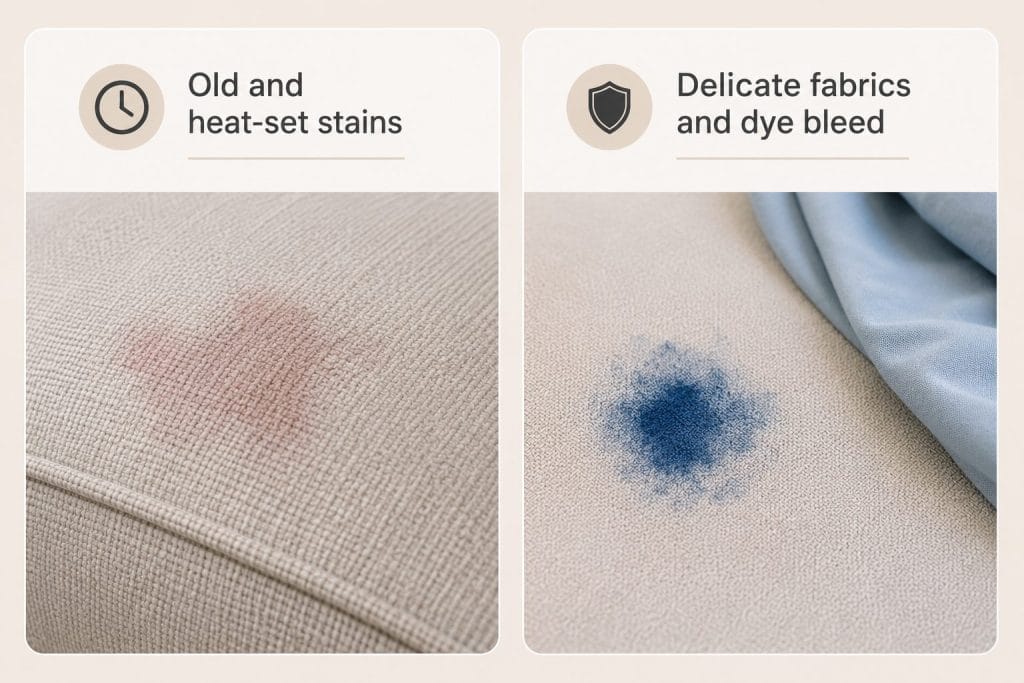
Old and heat-set stains
Time and heat are the two biggest obstacles to a clean result. A stain left for months has had the chance to bond firmly with the fibres, and one that’s been through heat, whether from hot water, a warm room or direct sun, may have set beyond full removal. A professional clean can still improve the appearance considerably in these cases, though a faint shadow sometimes remains.
Delicate fabrics and dye bleed
Some fabrics limit what any method can safely do. Delicate materials such as silk or certain natural weaves won’t tolerate aggressive treatment, and some coloured fabrics are prone to dye bleed if they’re handled incorrectly.
The priority here is protecting the fabric while lifting as much of the stain as possible, which is exactly the kind of judgement a professional brings. It’s also why matching the cleaning method to the fabric matters so much on anything you’d rather not risk.
Why Professional Cleaning Gets Better Results
Home remedies have their place for fresh spills, but professional cleaning consistently achieves more on stubborn or set-in stains, for two main reasons.
Matching the method to the stain and fabric
A single all-purpose cleaner rarely works across the board, since each stain type responds to a different chemistry. Professionals identify what caused the mark and what the fabric can handle, then choose the solution and technique to suit that combination. This tailored approach also avoids the common DIY mistakes that spread a stain or damage the weave.
Reaching stains deep in the cushions
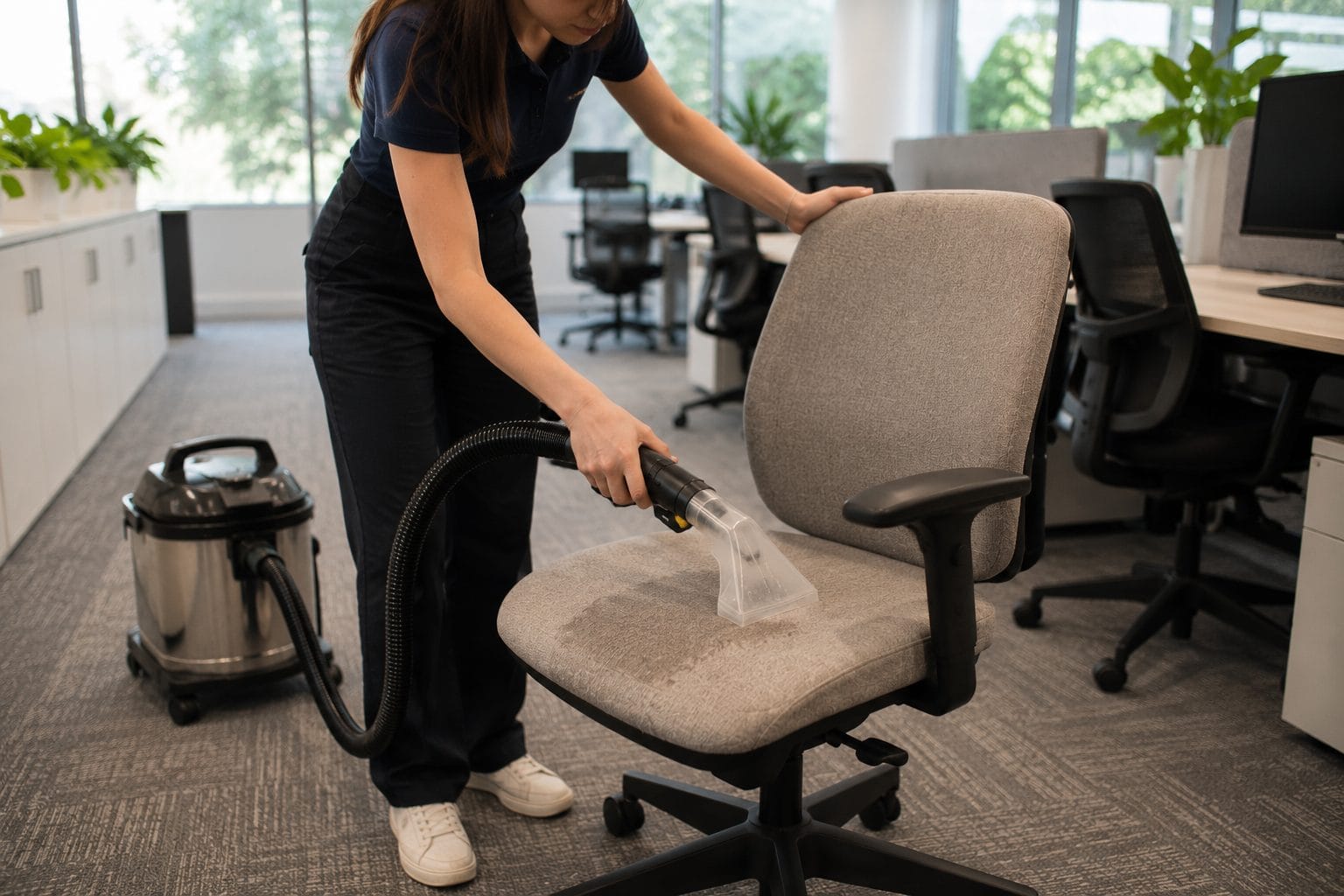
Many spills soak well below the surface and settle into the padding, where a cloth or spray can’t reach. Professional hot water extraction draws the stain and moisture out from deep within the cushions, lifting what surface cleaning leaves behind and helping to prevent lingering odours or marks that resurface later.
Book Professional Upholstery Cleaning in Melbourne
With couch stains, speed and the right method make all the difference. Acting quickly on a spill, keeping heat away from protein stains, and knowing when a mark is beyond a DIY fix all help you get the best possible result.
For anything stubborn, set-in or on a fabric you’d rather not gamble with, professional treatment gives your couch its best chance. You can learn more on our upholstery cleaning page, and if you’re weighing up how regularly to book, it helps to know how often a couch should be professionally cleaned.
Got a stain you’re unsure about? Send our team the details and we’ll let you know what we can do before it sets.